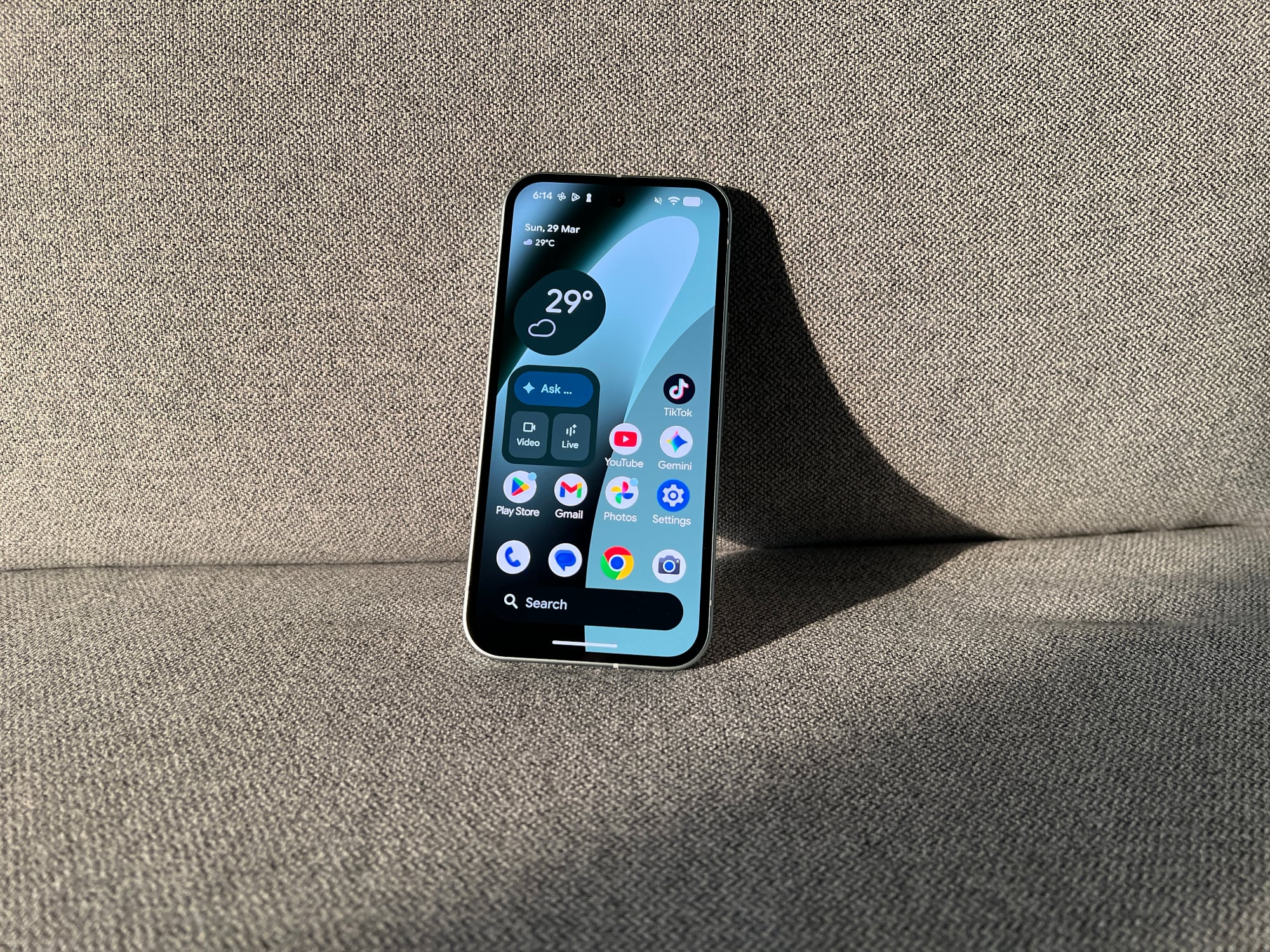
Google’s A-series has long been the thinking person’s mid-range phone: flagship-grade software, excellent cameras, and a price that doesn’t require a carrier contract to justify. The Google Pixel 10a continues that formula with a familiar starting price of S$799 in Singapore. But in a year where even mid-range phones are getting bolder, faster and more ambitious, is the Pixel 10a a quiet refinement, or a missed opportunity?
- Price: From S$799, get it at Shopee, Lazada and Google Store
- Display: 6.3 inches, 2,424 x 1,080 pixels
- Processor: Google Tensor G4
- Rear cameras: 48MP, f/1.7 (wide); 13MP, f/2.2 (ultra-wide)
- Selfie camera: 13MP, f/2.2 (ultra-wide)
- Battery: 5,100mAh
- Weight: 183g
| PROS | CONS |
| Great cameras | Last-generation Tensor G4 chip |
| Brighter display | No telephoto camera |
| Gorilla Glass 7i higher durability | No Qi2 magnetic charging |
| Seven years (till 2033) of OS and security updates | Same design as predecessor |
If you have seen a Pixel 9a, you’ve essentially seen the 10a. And that’s both good and bad. The 10a retains the Tensor G4 processor, the same chip used in the Pixel 9a, rather than adopting the newer G5 found in the Pixel 10 flagship line. That decision means this device is iterative rather than revolutionary.
What Google did upgrade is the display. The Pixel 10a now peaks at 3,000 nits brightness and upgrades to Gorilla Glass 7i for improved durability, which is a good improvement over the 9a’s much older Gorilla Glass 3. In daily use, that brightness bump matters. Outdoor visibility is excellent, HDR content pops more convincingly, and the phone simply feels more modern when placed beside other mid-range smartphones.

By sticking with the Tensor G4, Google prioritises stability over risk. Performance remains solid for everyday tasks, AI features, and photography workloads. Not to mention, it even works with Apple’s AirDrop, so you can share your photos with your iPhone mates.
In the Geekbench 6 CPU benchmark tests, it scored 1,701 (single-core) and 4,413 (multi-core). As you might expect, the scores are not much different from Pixel 9a’s 1,641 (single-core) and 4050 (multi-core). By comparison, the Pixel 10 Pro scored 2,184 (single-core) and 5,658 (multi-core).

No, the Pixel 10a isn never meant to be a gaming powerhouse. Where the Pixel still stands apart is software longevity. The Pixel 10a ships with Android 16 and is promised seven years of OS and security updates, all the way till March 2033. That’s industry-leading, and probably the strongest reason to buy this smartphone.
Camera-wise, the Pixel 10a keeps the proven 48MP main camera and 13MP ultra-wide rear camera setup from the 9a. So what’s new? Google has added select AI-driven camera features from the Pixel 10 series, including Auto Best Take and Camera Coach. I personally don’t usually use these features, but I think some users might like it.

There is no telephoto lens or radical sensor upgrades here. But what you do get is one of the most reliable computational photography systems. Photos remain detailed, contrasty and consistently social-media ready, which, I think for most users, is exactly what matters.


Battery capacity remains unchanged, but Google claims 30 hours of typical use and up to 120 hours with Battery Saver. Charging finally sees a meaningful boost from its predecessor at 30W wired charging (up from 23W) and 10W wireless charging (up from 7.5W). That puts it more in line with modern expectations, though it still lacks Qi2 magnetic support – a notable and strange omission in 2026. Strange, considering how Google played up its Pixelsnap accessories previously.
VERDICT: The Google Pixel 10a doesn’t try to be exciting. It tries to be dependable. It polishes the Pixel 9a’s rough edges with brighter screen, tougher glass, faster charging, and longer runway. It keeps the same trusted camera hardware and stable Tensor G4 chip. It delivers Android the way Google believes it should be experienced — clean, helpful, and long-supported.

If you are upgrading from a Pixel 6a, 7a, or older device, this is an easy recommendation. If you already own a Pixel 9a? You can safely skip it. In short, the Pixel 10a is not the boldest mid-range Android smartphone of 2026. But it might just be the most sensible.