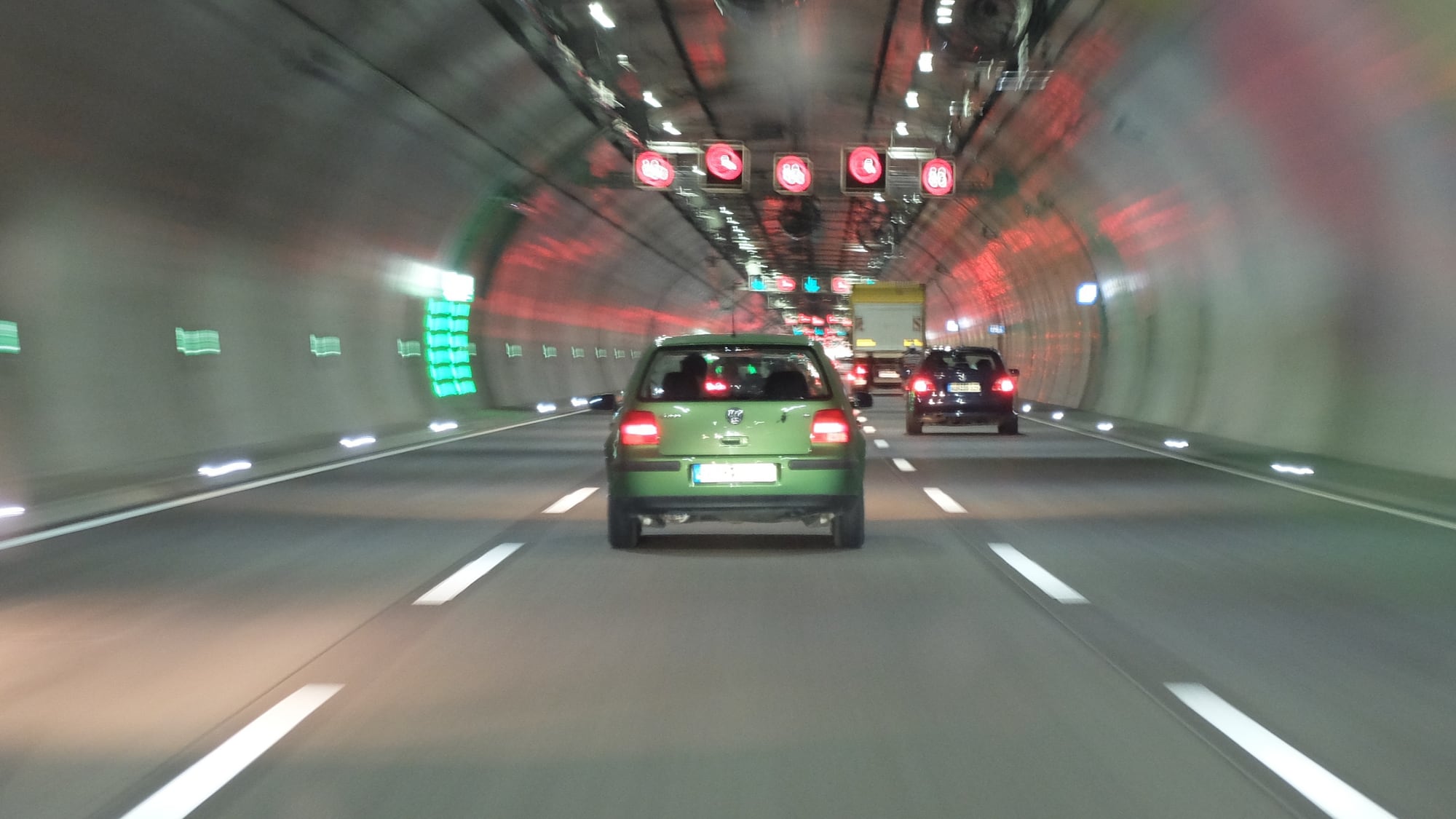
We have all been there. You join the PIE or the AYE, expecting a smooth commute, only to be greeted by a sluggish, undulating wall of steel. You look to your right, the overtaking lane, is a chaotic game of bumper-to-bumper chicken. You look to your left, the designated slow lane is completely, utterly empty (OK, exaggeration here but you know what I mean). And where is everyone else? Crammed into the middle lane, cruising along at a leisurely 70 km/h or slower.
Welcome to Singapore’s “Middle Lane Syndrome”, as I called it. It is a baffling daily phenomenon where heavy, slow-moving vehicles and casual cruisers alike converge in the centre, effectively turning a three-lane expressway into a congested two-lane bottleneck.
But this isn’t just bad driving etiquette; middle lane hogging has wider implications (see this story). Of course, this is not a phenomenon unique to Singapore. Other countries have the same issue, but probably not as prevalent from what I observed during my travels. Yet, if you sit back and look at the bigger picture, the middle lane is the perfect metaphor for the broader Singaporean psyche.
The “Kiasi” Comfort Zone
At its core, middle-lane hogging is driven by a deeply ingrained sense of “kiasi” (Hokkien for afraid to die), the quintessential Singaporean fear of losing out, or worse, getting penalised.
The right lane is too high-pressure; tailgaters will flash their high beams the millisecond you drop below the speed limit. Meanwhile, the leftmost lane is perceived as an absolute minefield. Drivers, even truckers, actively avoid it because they are terrified of getting trapped behind a merging bus, a container truck, or forced into an unexpected exit.
Compounding this is a distinct lack of situational awareness regarding bus lane hours. I observe many Singaporean drivers suffer from a phantom fear of the solid yellow line. Even at 11PM on a Saturday night, or on expressways where standard bus lane restrictions do not even apply, drivers will completely shun the left lane out of a paranoid, knee-jerk reflex that they might get slapped with a fine.
So, what do we do? We choose the perceived safety of the middle. It is the ultimate comfort zone. This behaviour, I feel, perfectly mirrors how many Singaporeans navigate life and career paths. We are conditioned to avoid the extremes.
We don’t want to be at the absolute back, but we are often too terrified of the exposure that comes with being at the very front. The middle lane represents the path of least resistance, a place where you can coast along without having to make difficult decisions, read the changing signs around you, or take bold risks. It is precisely why thinking out of the box is so rare in Singapore. I mean, when you are perfectly comfortable in the middle, why bother looking for a new route?
The Illusion of Convenience
Of course, defenders of the middle lane will offer seemingly practical justifications. “It makes it easier to overtake if someone slows down,” they will say, or “It gives me the flexibility to change to the right lane whenever I need to”.
Reality is actually quite different, as the shared article above suggests. When slow-moving vehicles hog the centre lane, it creates a dangerous ripple effect. Instead of a smooth flow of traffic, it forces faster, impatient drivers to weave erratically between lanes, fuelling road rage and aggressive behaviour.
Furthermore, by rendering the left lane useless, we are actively wasting infrastructure. We build expansive, multi-lane highways only to voluntarily reduce them to two functional lanes because we refuse to spread out. It is counter-intuitive, inefficient, and entirely self-inflicted.
Finding Speed in the Slow Lane
If we want to fix our expressways and by extension, our rigid mindset; we will need to learn to adapt. This is especially so given the continued onslaught of AI. Even government jobs are not the iron rice bowls they used to be (as some ex-GovTech people will attest).
Drivers need to overcome the stigma of the left lane. It isn’t a lane of shame for the slow or broken down; it is a vital part of the highway ecosystem. In fact, as any seasoned driver will tell you, because everyone is so busy crowding the middle, the leftmost lane might sometimes be the fastest, clearest run on the entire road. In fact, I have been using the “slow” lane quite often to overtake these middle lane hoggers.
Sometimes, stepping out of the crowd and embracing the lane everyone else is avoiding might just be the only way to actually get ahead. It’s time to leave the comfort of the middle lane behind – both on the tarmac and in life.