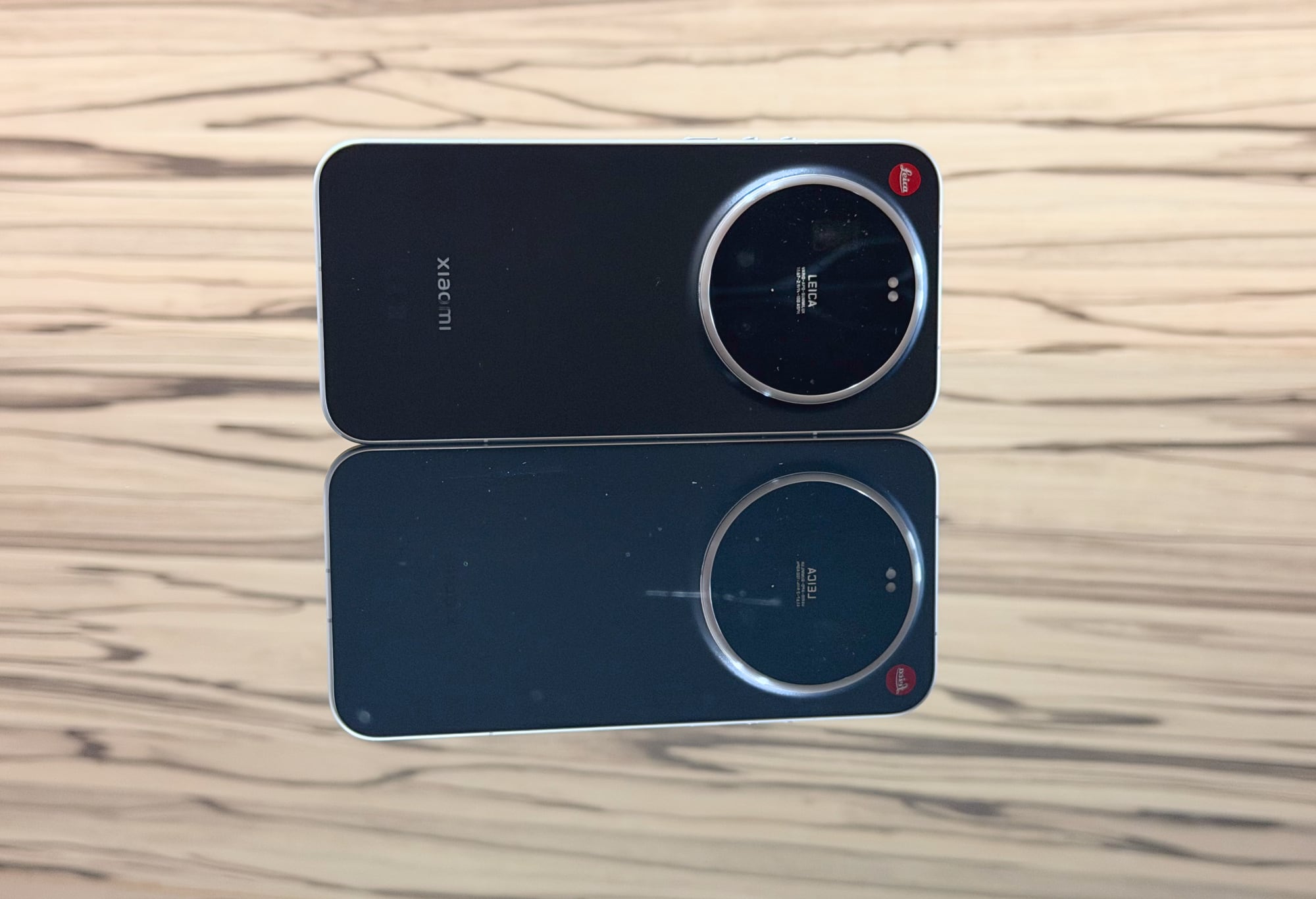
There are smartphones that take excellent photos. There are even smartphones that want to replace compact cameras. And then there is the Leica Leitzphone powered by Xiaomi, a device that approaches smartphone photography from an altogether different philosophical starting point.
This isn’t just another flagship with a big image sensor and some artificial intelligence (AI) buzzwords slapped on top. Leica appears to have asked a more fundamental question: What should a Leica phone feel like to a photographer? The answer is not merely technical. It is aesthetic, tactile, and intentional.
- Price: S$2,299, get it at Leica Online Store
- Display: 6.9 inches, 2,608 x 1,200 pixels
- Processor: Qualcomm Snapdragon 8 Elite Gen 5
- Rear cameras: 50MP, f/1.7 (wide); 50MP, f/2.2 (ultra-wide); 200MP, f/2.4-3.0 (periscope telephoto, up to 4.3 optical zoom)
- Selfie camera: 50MP, f/2.2
- Battery: 6,000mAh
- Weight: 220g
| PROS | CONS |
| Refined camera-inspired design | Expensive |
| Superb image quality | Mechanical zoom range modest in real life |
| True mechanical 75-100mm optical zoom | Rotating camera ring can be overly sensitive |
| Flagship operational performance | 200MP mode adds resolution than details |
| Large and bright display | |
| Premium accessories (case, lens cap and wrist strap) |

The design of Leitzphone distinguishes itself immediately, albeit sharing the same shell as Xiaomi 17 Ultra. Where many contemporary flagships lean toward glossy spectacle, Leica opts for restraint. The rear panel is finished in black fibreglass, subtly textured and deliberately understated. A knurled metal frame adds grip and a tactile nod to traditional camera bodies. And in one corner sits the unmistakable red dot – no longer absent from Xiaomi hardware, but fully endorsed here.
The device is unapologetically substantial. At over 220g with a prominent circular camera module, it does not pretend to be delicate. Instead, it embraces its identity as a tool. It feels closer to a photographic instrument than a lifestyle accessory. This industrial clarity of purpose is reinforced by the included accessories — notably a case with a lens cap and wrist strap — small gestures that further blur the line between smartphone and camera.

One of the Leitzphone’s most distinctive features is the rotating camera ring encircling the lens module. It can be configured to adjust zoom, exposure, or Leica colour profiles, and even to launch the camera application.

In theory, it introduces a welcome physicality to mobile photography — an antidote to purely on-screen interaction. In practice, opinions are divided. Some find the tactile engagement satisfying and precise; some consider it too easy to rotate inadvertently and less intuitive than on-screen controls. I find it to certainly a good-to-have, but not essential.
Yet, the ambition is noteworthy. Smartphone makers are less willing to experiment with mechanical interaction in a category increasingly defined by software abstraction. Leica’s willingness to attempt something different is itself a statement.
Beneath its refined exterior, the Leitzphone shares its core imaging hardware with the Xiaomi 17 Ultra. The main camera features a 50-megapixel (MP) 1-inch Light Fusion 1050L image sensor paired with a large-aperture ƒ/1.7 lens. Crucially, it incorporates LOFIC (Lateral Overflow Integration Capacitor) technology, designed to expand dynamic range by improving highlight retention.

The telephoto module is equally ambitious with a 200MP image sensor coupled with a mechanically moving 75–100mm optical zoom. Rather than switching between fixed focal lengths or relying heavily on digital cropping, the lens physically shifts within that range. While 25mm of zoom range may appear modest on paper, it places the phone squarely within classic portrait territory.
The ultra-wide-angle and front-facing cameras complete the array, but it is the interplay between the 1-inch main image sensor and the mechanical telephoto that defines the Leitzphone’s photographic character. You can see the zoom range of the Leitzphone below.


The most consequential innovation here may not be the mechanical zoom but LOFIC technology in the main sensor. Highlight control, long a weakness of smartphone photography, is markedly improved. Bright skies retain texture. Artificial lighting at night resists clipping. Shadows remain rich without being artificially lifted to the point of sterility.

There is, however, a caveat: LOFIC is present only on the main camera. As a result, the telephoto and ultra-wide-angle lenses cannot always match its dynamic range performance perfectly. The disparity is subtle but noticeable in challenging lighting conditions.

If hardware provides the structure, software supplies the soul. The Leitzphone expands upon Xiaomi’s existing Leica collaboration by introducing additional Leica-specific modes and filters. Leica Authentic and Leica Vibrant serve as overarching colour profiles, while a broader array of Leica Looks, including Chrome, Classic, Contemporary, Brass, and Monochrome High Contrast, allow for nuanced stylistic control.

Particularly noteworthy is Leica Essential mode, which emulates the color rendering of the Leica M9 and the monochrome aesthetic of the M3 paired with Monopan 50 film. These are not superficial filters; they are carefully tuned simulations that encourage intentional shooting.

For photographers inclined toward black-and-white street work or filmic tonal restraint, these modes are more than novelty. They offer a distinctive visual identity directly out of camera.

Beyond imaging, the Leitzphone is a fully realized flagship. Powered by the Snapdragon 8 Elite Gen 5 processor with 16GB of RAM and up to 1TB of storage, performance is fluid and uncompromising. The 6.9-inch LTPO OLED display is bright, sharp, and well-suited to reviewing images in detail.
Battery capacity stands at 6,000mAh with 90W wired and 50W wireless charging. While endurance is solid, intensive photography sessions can deplete the battery quickly. It remains reliable for a full day of typical use, though not exceptional within its class.

In Singapore, at S$2,299, the Leitzphone is S$500 more expensive than the Xiaomi 17 Ultra (though the Xiaomi model has a smaller 512GB storage compared to Leitzphone’s 1TB). The Leitzphone’s additional cost is attributable to its design refinements, Leica-exclusive software elements, and branding. Whether that premium is justified depends less on specifications and more on sensibility. Leica has never competed on price; it competes on experience.
VERDICT: The Leica Leitzphone is not simply a smartphone with a large sensor. It is a deliberate exploration of what mobile photography can be when guided by a century-old camera philosophy.

It prioritises mood over maximal processing, tonal depth over exaggerated HDR, and tactile engagement over purely digital interaction. It is imperfect – occasionally inconsistent across lenses, ambitious but not always practical in its mechanical features. Yet, it remains one of the most compelling camera phones now.
In an era of incremental upgrades and algorithmic polish, the Leitzphone stands apart not because it is flawless, but because it dares to feel intentional. For those who value photography not merely as documentation but as craft, that distinction may be enough.